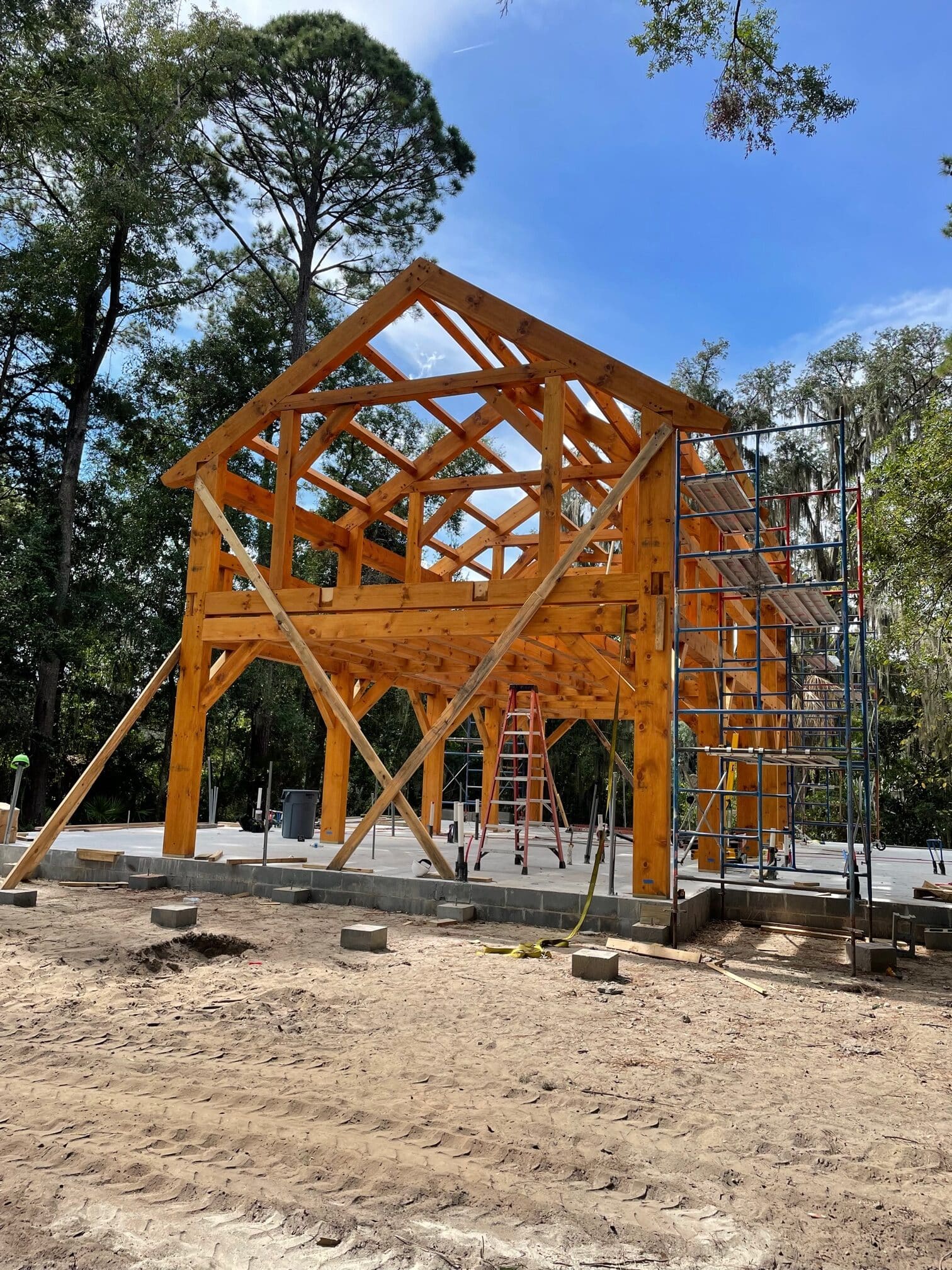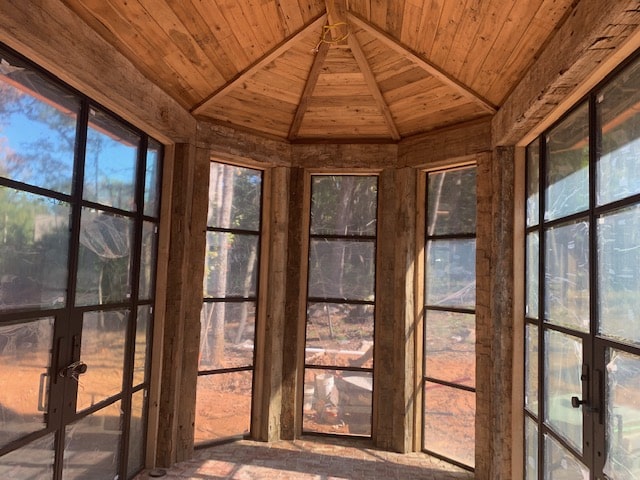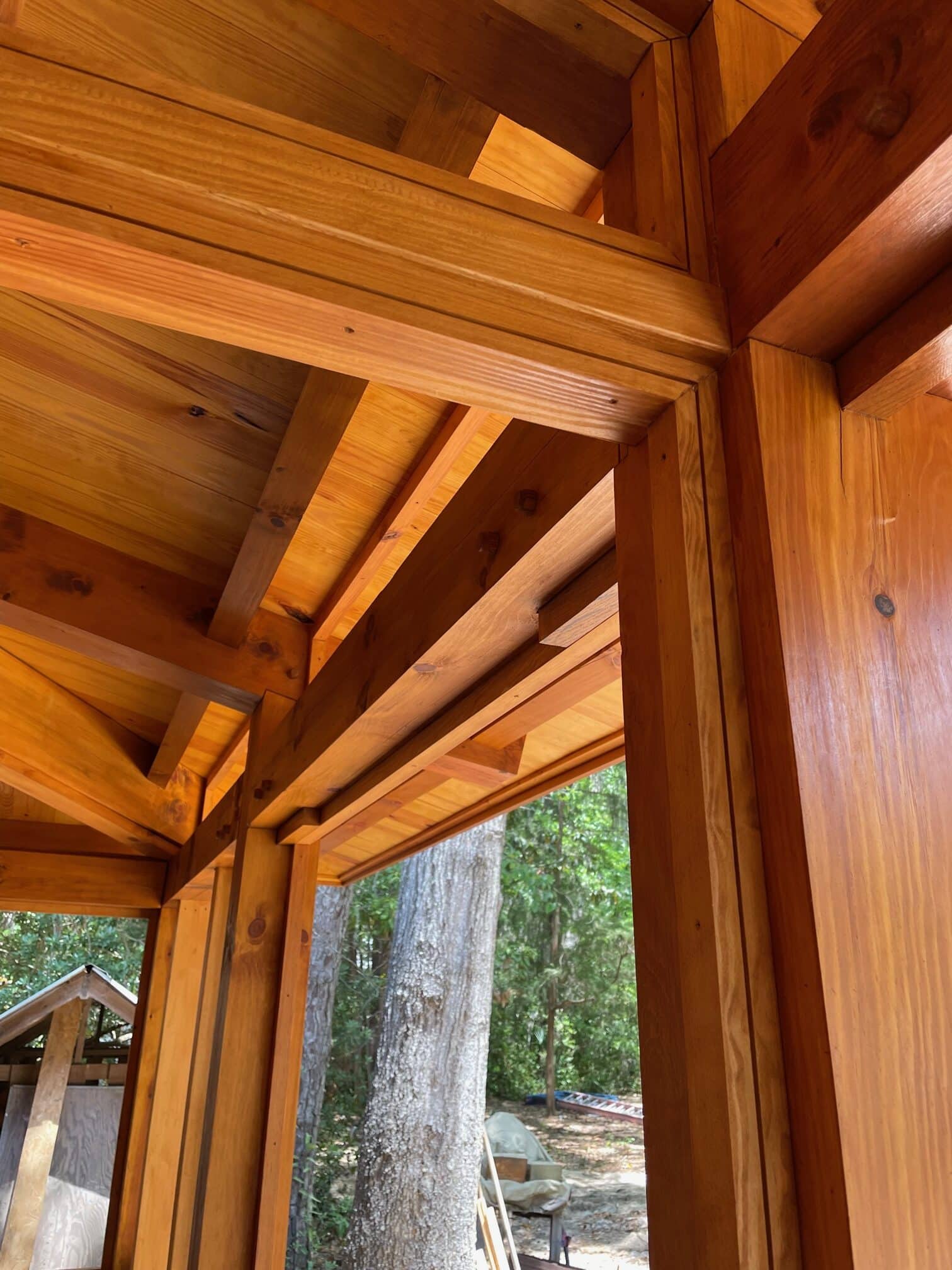
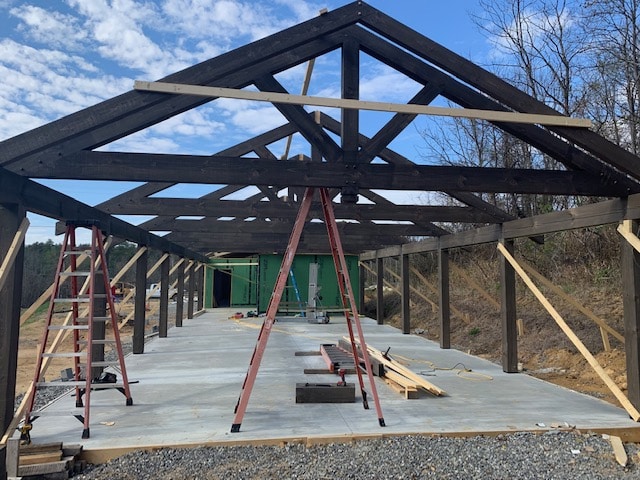
Timber frame construction has become an increasingly popular building method in Western North Carolina, especially in areas like Asheville and Waynesville where homeowners value craftsmanship, durability, and architectural character. Known for its exposed beams, structural strength, and timeless appeal, timber framing blends traditional building techniques with modern performance standards. Whether you’re planning a custom home, mountain retreat, or commercial structure, understanding how timber frame construction works can help you make informed decisions throughout the building process.
What Is Timber Frame Construction?
Timber frame construction is a building method that uses large, solid wood beams joined together with traditional mortise-and-tenon joinery. Unlike conventional stick framing, timber framing relies on the structural strength of the wood itself rather than metal fasteners. These joints are often secured with wooden pegs, creating a frame that is both strong and visually striking.
This approach has been used for centuries and continues to be valued for its longevity, flexibility, and architectural beauty. Today, timber frame construction is often paired with modern materials and engineering to meet current building codes and energy-efficiency standards.
Why Timber Frame Construction Works Well in Western North Carolina
Asheville and Waynesville present unique building conditions, including varied elevations, changing weather patterns, and sloped terrain. Timber frame construction adapts exceptionally well to these environments for several reasons:
- Structural strength that performs well in mountain conditions
- Design flexibility for open floor plans and vaulted ceilings
- Natural materials that complement the surrounding landscape
- Long-term durability suited for seasonal climate changes
Timber framing also allows for customized designs that feel right at home in both rustic and modern mountain architecture.
Key Benefits of Timber Frame Construction
Timber frame construction offers several advantages over conventional building methods, making it an appealing option for homeowners and builders alike.
Design Freedom and Open Spaces
Because timber frames carry the structural load, interior walls are not required for support. This allows for open floor plans, large windows, and dramatic ceiling heights that showcase natural light and scenic views.
Exceptional Durability
Heavy timber structures are known for their longevity. When properly designed and maintained, timber frame buildings can last for generations.
Energy Efficiency
Timber frame homes often pair well with high-performance insulation systems such as structural insulated panels (SIPs), improving energy efficiency and indoor comfort.
Timeless Aesthetic Appeal
Exposed beams and handcrafted joinery add warmth, character, and value that cannot be replicated with conventional framing.
Timber Frame vs. Conventional Framing
While both building methods have their place, timber frame construction stands out in several ways:
- Larger structural members provide superior load-bearing capacity
- Fewer interior supports create flexible layouts
- Exposed wood elements enhance visual appeal
- Traditional craftsmanship adds long-term value
Conventional framing may be quicker in some cases, but timber framing offers a level of quality and customization that appeals to those seeking a distinctive structure.
The Timber Frame Construction Process
Understanding the process can help set expectations and ensure a smooth project timeline.
- Design and Engineering
Each timber frame project begins with detailed design and engineering to ensure structural integrity and compliance with local codes. - Timber Fabrication
Beams are cut, shaped, and fitted off-site using precise measurements and traditional joinery techniques. - On-Site Assembly
The timber frame is delivered to the site and assembled, often in a short timeframe, creating the structural shell of the building. - Enclosure and Finishing
Once the frame is in place, roofing, insulation, exterior finishes, and interior systems are completed.
Many timber frame projects are integrated into larger new construction plans, working seamlessly alongside other trades and contractors. Learn more about the full building process here: https://www.blueridgepostandbeam.com/new-construction/
Customization Options in Timber Frame Design
One of the biggest advantages of timber frame construction is customization. Homeowners can choose from a wide range of design elements, including:
- Wood species and finishes
- Beam profiles and joinery styles
- Rooflines and ceiling heights
- Hybrid designs that blend timber framing with other construction methods
Timber framing works equally well for residential homes, commercial buildings, pavilions, and specialty structures.
Working with Subcontractors on Timber Frame Projects
Timber frame construction often involves close coordination with other skilled trades. Experienced timber frame builders frequently collaborate with subcontractors to ensure seamless integration with foundations, enclosures, and interior systems.
Professional subcontracting services help maintain quality, efficiency, and communication throughout the project. If your build requires specialized coordination, learn more here: https://www.blueridgepostandbeam.com/subcontracting/
Local Notes for Asheville and Waynesville
In Asheville and Waynesville, timber frame construction aligns perfectly with the region’s appreciation for craftsmanship and mountain-inspired design. Local zoning requirements, elevation changes, and weather considerations make it especially important to work with builders who understand the area. Timber frame structures are well-suited for mountain homes, second residences, and custom builds throughout Western North Carolina.
Is Timber Frame Construction Right for Your Project?
Timber frame construction is ideal for those who value architectural character, structural integrity, and long-term performance. It’s especially well-suited for custom homes and projects where design flexibility and craftsmanship are priorities.
If you’re considering timber frame construction in Asheville or Waynesville, working with an experienced builder ensures your project is designed and executed correctly from start to finish.
To discuss your project or explore your options, contact the team here: https://www.blueridgepostandbeam.com/contact/